
Rajma Chitra - Joshimath: From the Hills to Your Heart


Just Organik : Carrying the Story Forward
At Just Organik, we’ve walked those mountain trails, spoken to those farmers, and seen how much love goes into every handful of beans.
Our role is simple – to make sure that the same authenticity, the same mountain purity, reaches your plate, just as nature intended.
By helping farmers from Joshimath and nearby villages bring their produce to wider markets, we’re not just selling rajma – we’re sharing a legacy, sustaining livelihoods, and keeping the Himalayan soil alive in every kitchen that tastes it.
Because in every bowl of Rajma Chitra – Joshimath, there is more than food. There is the scent of pine, the echo of distant prayers, the strength of the people, and the soul of the mountains themselves.
When Rajma Chitra – Joshimath reaches your kitchen, it brings that same mountain simplicity with it. It cooks quickly, tastes full-bodied, and carries a freshness that no factory can replicate.
Whether it’s served with rice, paratha, or just a spoonful of ghee, it reminds you of something pure – food that feels like home.
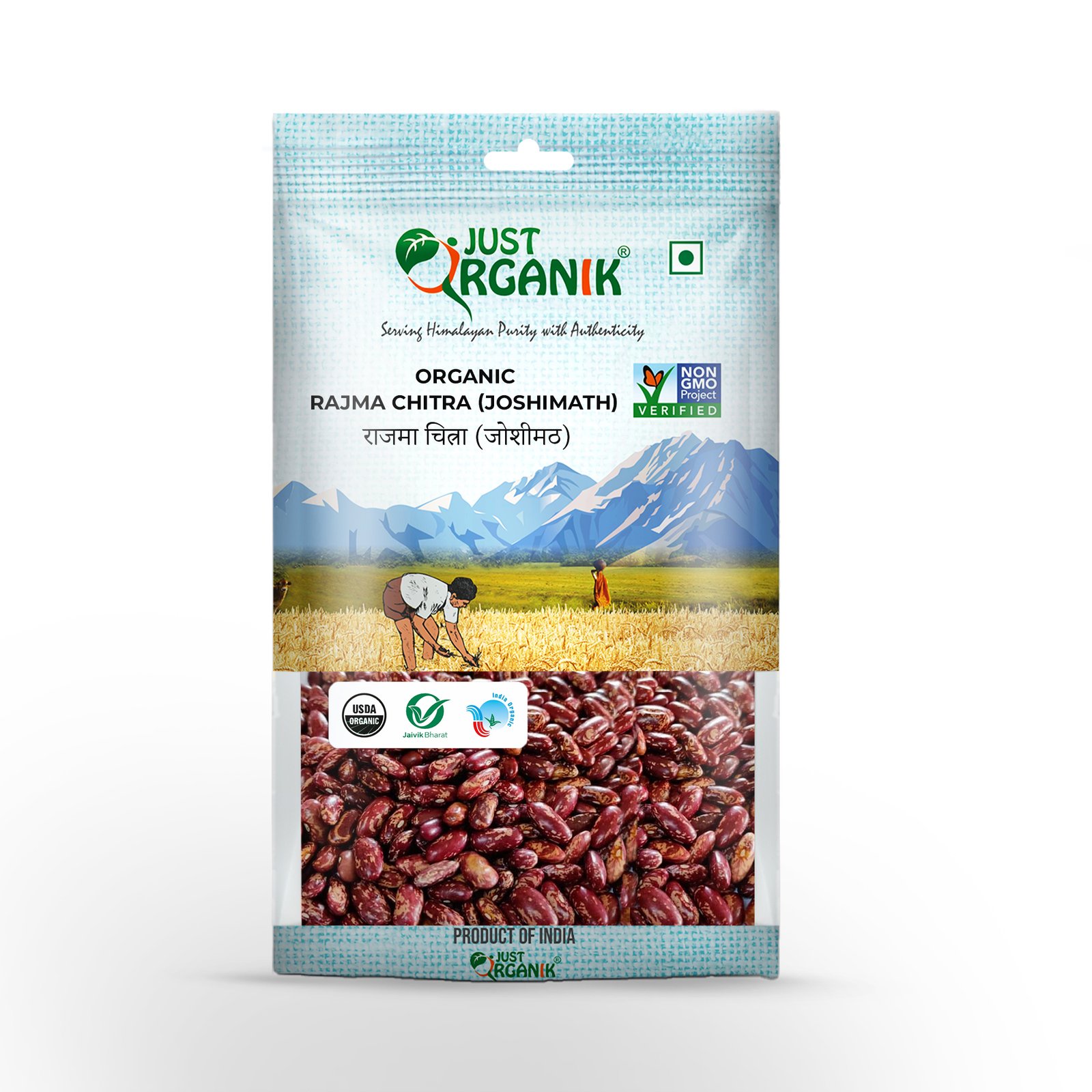
Buy Rajma Chitra – Joshimath here.





 INR
INR EUR
EUR
 AUD
AUD
 GBP
GBP
 JPY
JPY